Why Seasonally Themed Gaming Designs Like the Funny Mummy Gamer Halloween Controller Are Winning the Print-on-Demand Market
Product creators and digital entrepreneurs know one truth better than most: timing and theme alignment can make or break a seasonal product launch. The gaming merchandise space has matured rapidly over the past three years, and designs that blend established player identity with holiday aesthetics are consistently outperforming generic alternatives. One design concept that captures this intersection elegantly is the Funny Mummy Gamer Halloween Controller — a playful fusion of spooky season charm and gaming culture that speaks directly to what modern buyers want from limited-run, occasion-specific apparel and decor.
This article unpacks the broader significance of designs like this one. Rather than simply describing a graphic, we will examine how the controller-meets-Halloween motif reflects shifting consumer expectations, emerging production workflows, and the strategic logic that successful print-on-demand sellers and creative professionals are applying across platforms. If you build seasonal product catalogs, curate themed collections for gaming communities, or operate in the sublimation and direct-to-garment space, the insights here will help contextualize what makes a seasonal gaming asset commercially viable — and why the mummified controller concept has genuine staying power beyond a single October.
What the Funny Mummy Gamer Halloween Controller Concept Actually Represents
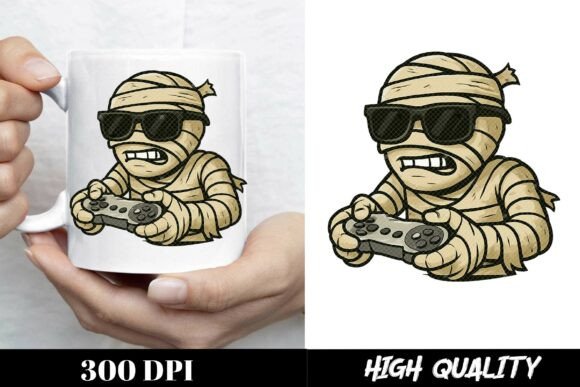
At surface level, the Funny Mummy Gamer Halloween Controller is a graphic that remixes a standard gaming controller with Halloween visual cues — wrapped bandage textures reminiscent of a classic monster-movie mummy, possibly accompanied by eerie color palettes, glowing accents, or playful typography. But reducing it to a feature list misses the point entirely. This design archetype sits at the confluence of three cultural and commercial currents that are shaping digital product sales in 2025 and beyond.
First, identity-driven consumption continues to dominate. Gamers do not simply buy gaming-themed merchandise — they purchase items that articulate what kind of gamer they are. A standard controller graphic says, "I play video games." A Halloween-modified controller says, "I play video games, I love the spooky season, and I have a sense of humor about both." The layering of identity markers increases perceived relevance and personal connection, which directly reduces purchase hesitation.
Second, seasonal micro-niches are proving more lucrative than broad, year-round categories for independent creators. The broader the audience, the louder the competition. Narrowing to a Halloween-gamer overlap reduces direct competitors while preserving a passionate, reachable customer base. This is not speculation — marketplaces like Etsy, Creative Fabrica, and Design Bundles consistently show that Halloween-themed gaming assets clear out faster than evergreen ones during Q3 and early Q4, often at premium pricing.
Third, the design vocabulary of gaming peripherals — controllers, headsets, consoles, arcade sticks — has become a universally recognized shorthand. People who have never held a pro controller still understand what it signifies. Adding seasonal distortion (bandages, cobwebs, jack-o'-lantern faces, witch hats) creates instant novelty without sacrificing recognizability. The mummy wrap treatment specifically works because it is transformative rather than additive. The controller is not simply decorated; it is reimagined as a character, which elevates the design from novelty to narrative.
The Market Mechanics: Why Creators Are Paying Attention
If you sell digital design assets — SVGs, transparent PNGs, sublimation-ready files — or physical products printed with those designs, you have likely noticed that seasonal gaming designs command higher engagement rates across social media storefronts than their non-seasonal counterparts. There are structural reasons for this beyond the obvious "Halloween sells."
Scarcity Without Manipulation
Seasonal designs naturally create a limited window of relevance. A buyer who sees a Funny Mummy Gamer Halloween Controller graphic in mid-October knows instinctively that the purchase is time-bound in its usefulness — Halloween parties, game night gatherings, and spooky-season content creation all have hard calendar deadlines. This authentic scarcity drives conversion without the need for artificial urgency tactics. The customer's internal calendar does the work.
Gifting Psychology Meets Gaming Culture
Gamer parents shopping for their children, partners looking for unique presents, and event organizers sourcing coordinated group shirts all approach seasonal gaming merchandise with a different mindset than they bring to standard apparel shopping. The purchase is often mission-driven: "I need something cool for my son's Halloween game night" or "Our gaming group is doing a costume contest and matching shirts would be perfect." When a design like the mummy controller appears in search results, it answers an unspoken brief — it is simultaneously spooky, gamer-specific, and appropriate for wearables and print projects. That alignment between product attributes and customer intent is the hallmark of high-converting seasonal inventory.
File Versatility Expands the Addressable Market
The design under discussion is delivered as a high-resolution PNG with a transparent background, making it compatible with sublimation workflows, direct-to-garment (DTG) printing, heat transfer vinyl cutting, and even digital compositing for poster design and social media graphics. This technical accessibility means a single asset serves not only apparel creators but also party decor designers, sticker makers, tumbler and mug customizers, and content creators building Halloween-themed gaming overlays for streams and videos. The broader the application surface, the more storefronts and use cases a design can serve — a fact that experienced sellers actively factor into their asset purchasing decisions.
How Changing Consumer Preferences Are Reshaping Seasonal Design Expectations
The days when slapping a pumpkin icon next to a generic gamepad image counted as a viable product are behind us. Consumers — especially the gaming demographic, which skews younger and is highly visually literate — have developed sophisticated taste filters. They scroll past lazy mashups. They reward intentionality.
The mummified controller aesthetic succeeds because it approaches the Halloween-gaming crossover with what designers call conceptual commitment. The controller does not merely sit next to Halloween elements; it becomes the Halloween element. Bandage wraps suggest age, mystery, and playful menace. The silhouette remains readable as a controller, preserving the identity signal, but the surface treatment transforms the emotional register entirely. This is the kind of design thinking that separates products people glance at from products they add to cart.
We are also witnessing a shift toward humor-forward seasonal merchandise in gaming communities. Gamers are increasingly resistant to designs that take themselves too seriously. The "funny mummy" modifier in the design's conceptual framing is not incidental — it signals lightheartedness, self-awareness, and approachability. A parent buying a hoodie for a ten-year-old gamer wants something cool, not something that tries too hard. Humor de-risks the purchase by lowering the perceived social stakes of wearing themed apparel. If someone comments on the shirt, the wearer can laugh along with the joke rather than defend their aesthetic choices.
Practical Applications Across Production Methods and Platforms
For print-on-demand entrepreneurs and physical product creators, understanding how a design performs across different production pipelines is essential. The transparent-background PNG format provided with this design type is deliberately chosen to maximize compatibility.
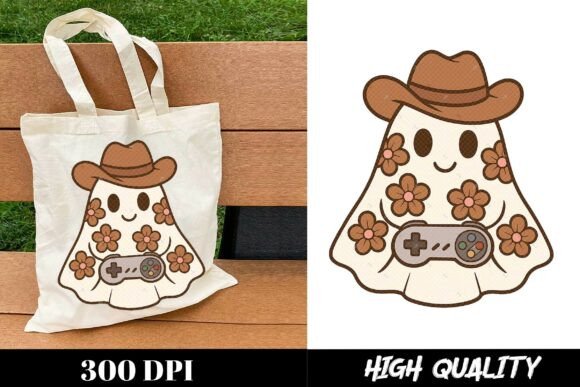
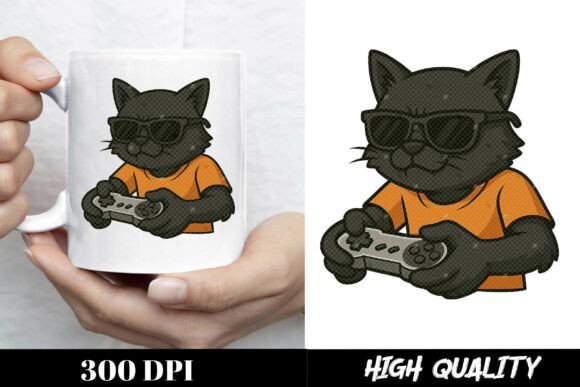
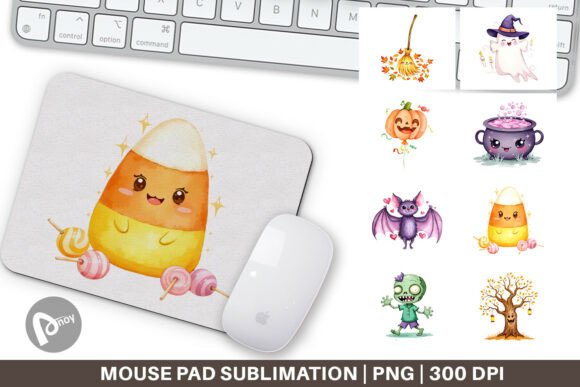
- Sublimation printing: The design transfers cleanly onto polyester fabrics and coated hard goods — think gaming mouse pads, phone cases, ceramic mugs, and polyester-blend t-shirts. No white underbase is needed, and edge clarity remains crisp even at smaller scales.
- Direct-to-garment (DTG): On cotton and cotton-blend garments, the transparent background integrates seamlessly, allowing the shirt's base color to show through naturally. This is particularly important for designs with irregular silhouettes, where a white bounding box would ruin the aesthetic.
- Heat transfer vinyl (HTV): Creators can isolate and cut the design for layered vinyl application, enabling multi-color hoodie and tote bag production without requiring full-color printing equipment.
- Digital content creation: Streamers and YouTubers building Halloween-themed gaming content can use the asset in overlay graphics, thumbnail designs, and channel art — extending the design's lifecycle beyond physical products.
The multi-platform utility is not a happy accident; it is a deliberate design for maximum commercial reach. Sellers who understand this build product listings that showcase the design on diverse mockups — t-shirts, hoodies, posters, stickers, and digital downloads — all from one source file. This approach increases average order value through perceived variety while minimizing production complexity.
Connecting to Larger Developments in the Creator Economy
The Funny Mummy Gamer Halloween Controller is not an isolated phenomenon. It belongs to a rapidly expanding category of persona-plus-occasion design assets that reflect deeper structural changes in how digital goods are created, distributed, and consumed.
The Assetization of Seasonal Creativity
Graphic designers are increasingly packaging their creative output as licensable, ready-to-use assets rather than custom commissions. Platforms like Creative Fabrica, Design Cuts, and Gumroad have normalized the direct-to-creator asset marketplace. A designer who sketches a Halloween controller concept can now reach thousands of print-on-demand sellers within hours of uploading. This assetization model benefits both sides: designers generate passive income from designs that would otherwise sit in a portfolio folder, and sellers gain access to professional-grade artwork without commissioning custom pieces — which is especially valuable for seasonal inventory where speed to market matters more than exclusivity.
Micro-Seasonal Product Drops as a Business Strategy
Forward-thinking print-on-demand operators are moving away from the "list once, sell forever" model toward micro-seasonal curation. They plan product drops around specific date ranges — Halloween game nights in late October, back-to-school gaming setups in August, holiday LAN party merch in December — and retire or discount designs after the window closes. This approach keeps storefronts feeling fresh, aligns with platform algorithms that reward listing activity, and creates repeat-visit behavior among buyers who learn to check back for new seasonal releases. A design like the mummy controller fits perfectly into a late-September-to-early-November micro-season slot.
The Blurring Line Between Physical and Digital Merch
Increasingly, a single design serves both physical product lines and digital lifestyle expression. The same mummy controller graphic printed on a hoodie might also appear as a Discord server icon for a gaming community's Halloween event, or as part of a Twitch streamer's seasonal overlay package. Creators who recognize this dual-use potential structure their licensing and distribution accordingly, often bundling physical-product-ready files with web-optimized versions for digital use. This omni-channel design thinking is rapidly becoming standard practice among top-performing sellers.
What This Means for Your Business or Creative Practice
If you are a creator or entrepreneur evaluating seasonal gaming assets, the key takeaway is that contextual fit outweighs visual complexity. A design does not need to be the most technically elaborate piece in your catalog; it needs to satisfy a clearly identifiable use case with precision and personality. The mummy controller concept works because it answers three questions simultaneously: Is it clearly gaming-related? Is it unmistakably Halloween? Does it have personality beyond the mashup?
For those producing physical merchandise, consider expanding your mockup range to show the design in Halloween-party contexts — kids' game night setups, decorated streaming rooms, pumpkin-carving station apparel — rather than isolated on a white background. Contextual mockups help buyers visualize the product in their own lives, which is particularly powerful for time-sensitive seasonal items where imagination gaps can stall purchases.
For digital asset creators, the lesson is to invest in transformative seasonal concepts rather than surface-level holiday skins. The market has enough pumpkin-controller clipart. What it lacks — and what consistently sells out — are designs that fully commit to an aesthetic fusion with a point of view. Mummifying the controller is a creative decision. It tells a small story. Buyers feel the difference, even if they cannot articulate it.
As the creator economy continues to mature and seasonal selling becomes more structured and competitive, the designs that endure will be those that demonstrate genuine conceptual care. The Funny Mummy Gamer Halloween Controller represents exactly that kind of intentional creative work — and for sellers and creators who stock it, it represents a reliably performing asset that hits the seasonal sweet spot with clarity and charm. Whether you are preparing for Halloween parties, curating a game-night merchandise collection, or building a seasonal digital product catalog, understanding why this design type connects with buyers is as valuable as the design itself. That strategic awareness is what turns a seasonal trend into a repeatable, profitable creative practice.