Mouse Pad Baseball Glove Designs Bring More Than Just Style to Your Desk
A workspace that reflects your personality can shift the entire mood of your day. That is exactly why the Mouse Pad Baseball Glove concept has gained so much traction among remote workers, gamers, and creative professionals. The idea is simple but effective: take the nostalgic shape and texture of a baseball glove and adapt it into a functional, comfortable mouse pad. But as more people search for that one-of-a-kind desk accessory, they often stumble into predictable mistakes that cost them time, money, and print quality.
This is not just about picking a cool image. When you work with sublimation mouse pad files and custom prints, the technical side matters just as much as the aesthetic. The file type, the resolution, the dimensions, and even the fabric choice can determine whether that finished pad actually improves your productivity or becomes a distracting disappointment.
Why a Baseball Glove Mouse Pad Catches Attention
There is an immediate emotional pull to baseball glove imagery. It reminds people of summer afternoons, the sound of a fastball hitting leather, or coaching a child's little league team. Placing that image under your mouse or keyboard is a small way to keep that feeling nearby while you work.
Beyond the sentimental value, the curved silhouette of a glove breaks away from the standard rectangular pad. This shape can visually soften a desk setup and create a more relaxed, less corporate atmosphere. For gamers, it adds a personal touch to a battle station without sacrificing performance. The right surface texture, combined with crisp print quality, gives you both friction control and a conversation piece.
However, many buyers assume that any baseball-themed PNG file will look great when printed onto a sublimation mouse pad. That assumption leads to the first and biggest mistake.
Common Misunderstandings About Sublimation Files and What Actually Works
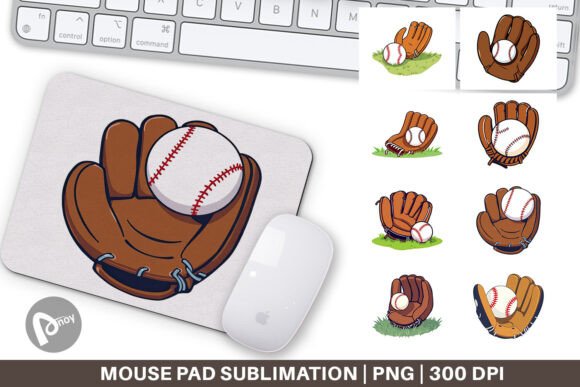
When you purchase a digital download like 8 File Png 9,5 x 8,1 inches 300 dpi, you might assume you are ready to print. The numbers look correct. The resolution seems high. But here is where inexperience shows: not all 300 dpi files hold the same level of detail, and the way a design is created matters deeply for sublimation results.
One frequent oversight is ignoring file construction. A PNG file can contain crisp vector-style artwork or it can originate from a low-quality raster image that was simply resized. Resizing a small, fuzzy graphic to 9.5 by 8.1 inches and slapping a 300 dpi label on it does not suddenly add real sharpness. The print will come out soft, with muddy edges around the glove stitching and blurred leather textures. For anyone wanting that embossed, dimensional look of a real baseball glove, this is a dealbreaker.
Another overlooked detail is the color profile. Sublimation printing uses CMYK color mixing, but many digital designs are created in RGB. The conversion between these color spaces can shift warm leather browns into dull, flat tones. Even worse, the iconic red stitching of a baseball can turn pinkish or overly neon. Checking that your purchased files are designed or pre-converted with sublimation in mind saves you from receiving a pad that looks nothing like the preview.
Incorrect Size Scaling and Bleed Issues
A sublimation mouse pad needs a slight bleed area around the design to prevent white edges after pressing. If the seller provides files at exactly 9.5 x 8.1 inches without extra margin, the image will not wrap cleanly over the edges. This forces the printer to either stretch the graphic awkwardly or leave unprinted borders. Neither outcome matches the product you envisioned.
Always confirm whether the 8 PNG files include a bleed, or if you need to add one yourself during the printing setup. Beginners often skip this step and wonder why the final pad looks cropped or misaligned. A simple pre-check with your printing provider about their exact template requirements avoids this entirely.
How Quality Choices Affect Comfort and Productivity
People fixate on visuals but forget the functional purpose of a mouse pad: supporting smooth, accurate mouse movements while reducing wrist strain. A baseball glove design printed on the wrong material can look fantastic but feel sticky or uneven. The surface needs a fine weave that allows optical mice to track precisely, and the rubber base should grip the desk without sliding.
Some low-cost sublimation pads use a coarse polyester top layer that frays quickly or irritates the wrist. Others have a base rubber that smells strongly of chemicals for weeks. When you add productivity into the equation, these factors matter. A pad that constantly shifts or makes your mouse sensor skip will break your concentration and slow down your workflow. The sublimation mouse pad you choose should blend visual appeal with reliable performance. Test reviews, material specs, and thickness descriptions matter as much as the graphic itself.
Overlooking the Rubber Base and Thickness
A pad thinner than 3mm often fails to cushion the wrist during long sessions. Too thick, and the edge becomes a bothersome ridge. The sweet spot for most users sits around 3mm to 4mm, with a densely textured rubber underside. When ordering a custom sublimation mouse pad featuring a baseball glove, ask the manufacturer about the base density. A firm, non-slip backing keeps the pad stationary during intense gaming or rapid design work, directly impacting comfort and precision.
Practical Advice Before You Purchase or Print
Instead of rushing toward the most affordable file pack, take a few quiet minutes to verify what you are really getting. An attractive preview image on a product page does not guarantee a high-fidelity print. Here is a practical checklist that experienced buyers use to avoid regret:
- Request a close-up detail sample from the file preview or seller. Look at the glove stitching, leather grain, and shadow details. If the sample looks soft or pixelated, the full-size print will too.
- Confirm the file's color mode. If the design is in RGB, ask if a CMYK version is available or if the seller can recommend a conversion profile.
- Check for transparent background consistency. PNG files should have clean, crisp edges around the glove shape. Halo effects or jagged outlines will transfer directly onto the pad.
- Measure your desk space. A 9.5 x 8.1 inch pad is compact. It works beautifully as a focused mouse zone, but if you want a pad that also holds your keyboard, this size will fall short. Know your intent before ordering.
- Print a test swatch if possible. Local sublimation shops often allow a small test run. Seeing how the browns and reds behave on fabric prevents an 8-pack of wasted transfers.
Examples of Better Approaches to Using Your PNG Files
Let's walk through a realistic scenario. A freelance graphic designer buys the 8 PNG pack of baseball glove designs. They want to press three pads: one for their home office, one for a client gift, and one for a gaming setup. The naive method is to send the files straight to a print-on-demand service and hope for the best.
The smarter approach starts with opening each file in editing software. The designer checks the actual pixel dimensions, not just the labeled inches. They confirm the resolution is a true 300 dpi at full scale. They slightly adjust the leather tones to compensate for sublimation's tendency to mute warm colors. They also extend the canvas by 0.25 inches on all sides to create a clean bleed. Only then does the file go to the printer.
The result? Three pads with rich, intentional coloring and a professional finish. No faded stitching, no awkward cropping, and no complaints from the client. This extra step takes fifteen minutes and transforms the outcome from mediocre to premium.
Where Desk Aesthetics Meet Daily Function
There is a quiet confidence that comes from sitting down at a desk that feels curated rather than thrown together. A well-printed sublimation mouse pad featuring a baseball glove design anchors the visual space while serving a real ergonomic need. But getting to that point requires understanding what you are buying and how to use it.
Many consumers skip the research phase and treat these items like disposable decor. When the print arrives blurry or the pad smells industrial, they blame the product instead of the process. The sellers who provide high-quality PNG files with proper resolution and transparent backgrounds have done their part. The rest falls on the buyer's attention to detail during printing and application.
By treating a sublimation mouse pad as both a functional tool and a personal statement, you naturally avoid the common traps. You ask better questions. You inspect file quality before purchase. You communicate clearly with your printer about bleed, color profile, and material specifications. These small habits separate a disappointing desk upgrade from one that genuinely boosts your mood and output.
Making the Final Decision Without Guesswork
Before clicking the buy button on any baseball glove mouse pad design, pause and imagine the end-to-end process. The digital file is only the starting point. Your printer choice, the blank pad quality, the heat press settings, and the post-press care all influence what arrives on your doorstep.
If you are ordering a finished pad rather than printing yourself, look for product photos that show the actual print, not just a digital mockup. Customer reviews that mention color accuracy and edge finishing tell you more than any product description. For those printing at home, invest in a pad blank that has good reviews specifically for sublimation. Cheap blanks often have inconsistent polyester coatings that reject dye in patches, ruining an otherwise beautiful design.
The baseball glove motif is a standout choice because it merges nostalgia, personality, and practicality. It works for a sports fan's gaming room, a coach's office, or a creative professional who just wants a desk that feels less sterile. When the file quality, print execution, and pad material align, that daily interaction with your computer becomes a little more enjoyable and a little more comfortable.